I read that F11 is the sharpest aperture....When i asked about this on another forum someone told me they posed this question to a Canon rep and the rep confirmed it....Does anyone have any knowledge on this that they can explain more of how that is? I would assume its the same with both film and digital....

-
Please use real names.
Greetings to all who have registered to OPF and those guests taking a look around. Please use real names. Registrations with fictitious names will not be processed. REAL NAMES ONLY will be processed
Firstname Lastname
Register
We are a courteous and supportive community. No need to hide behind an alia. If you have a genuine need for privacy/secrecy then let me know! -
Welcome to the new site. Here's a thread about the update where you can post your feedback, ask questions or spot those nasty bugs!
You are using an out of date browser. It may not display this or other websites correctly.
You should upgrade or use an alternative browser.
You should upgrade or use an alternative browser.
F11????????
- Thread starter ErikJonas
- Start date
Rachel Foster
New member
I'm going to take a stab at this. "The sharpest aperture" would be defined by the goal of the image wouldn't it? Can one say any setting is the xxx-est whatever?
Bart_van_der_Wolf
pro member
I read that F11 is the sharpest aperture....When i asked about this on another forum someone told me they posed this question to a Canon rep and the rep confirmed it....Does anyone have any knowledge on this that they can explain more of how that is? I would assume its the same with both film and digital....
Hi Erik,
It depends on the interaction between lens and sensor/film, and what level of detail is considered (limiting resolution, or something with higher contrast).
The system MTF (of the total optical system) is usually a good predictor of where the limits are, but also the output magnification may play a role due to the way the human visual system prefers contrast at certain spatial frequencies (level of detail at a given viewing distance).
There is one variable we do have control over (given a certain lens and sensor), is diffraction from using too narrow an aperture.
Bart

Asher Kelman
OPF Owner/Editor-in-Chief
f8 and be there!
Sharpest for what? It depends on what one is doing, the film or sensor size and how large one prints the image and the distance one views it from.
Roughly speaking with a DSLR using a 1/1.6 of a full frame sensor and 8-14 MP, use 5.6-8.0 for almost everything and you will be fine. Just go out and take picture! There's an old saying, "f8 and be there". The "be there" is today more important than anything else.
For landscape with a large format camera, f16 or tinier might be needed. However f11 with the tiny light catching sensels of the DSLR is already impaired by the phenomenon of diffraction due to light waves getting into trouble by the metal blades of the aperture. This shouldn't concern you at all. Just use f8 or below. It's not sharper at higher f stops, in fact sometimes its less sharp. What happens is that the region of the scene that's in focus expands from wide open apertures like f 1.4 to tiny apertures like f11. That means that much more of what you see from here to eternity is in focus. But do you want everything to be in focus and pin sharp? Often in artistic photography you will make choices special to your way of looking at things.
Please don't read up about diffraction, airy circles, circles of confusion or such thing right now until you have shot 1000 pictures you like. There's a great temptation in photography to be expert on the technicalities and never shoot or show.
Go out and be there. Use aperture priority mode, Av. Set the use a range of settings and take a picture of a basket of fruit or a long busy street. Now look at the details on each.
Asher
"Don't think; try!" and I made that one up 40 or more years ago!
Erik,I read that F11 is the sharpest aperture....When i asked about this on another forum someone told me they posed this question to a Canon rep and the rep confirmed it....Does anyone have any knowledge on this that they can explain more of how that is? I would assume its the same with both film and digital....
Sharpest for what? It depends on what one is doing, the film or sensor size and how large one prints the image and the distance one views it from.
Roughly speaking with a DSLR using a 1/1.6 of a full frame sensor and 8-14 MP, use 5.6-8.0 for almost everything and you will be fine. Just go out and take picture! There's an old saying, "f8 and be there". The "be there" is today more important than anything else.
For landscape with a large format camera, f16 or tinier might be needed. However f11 with the tiny light catching sensels of the DSLR is already impaired by the phenomenon of diffraction due to light waves getting into trouble by the metal blades of the aperture. This shouldn't concern you at all. Just use f8 or below. It's not sharper at higher f stops, in fact sometimes its less sharp. What happens is that the region of the scene that's in focus expands from wide open apertures like f 1.4 to tiny apertures like f11. That means that much more of what you see from here to eternity is in focus. But do you want everything to be in focus and pin sharp? Often in artistic photography you will make choices special to your way of looking at things.
Please don't read up about diffraction, airy circles, circles of confusion or such thing right now until you have shot 1000 pictures you like. There's a great temptation in photography to be expert on the technicalities and never shoot or show.
Go out and be there. Use aperture priority mode, Av. Set the use a range of settings and take a picture of a basket of fruit or a long busy street. Now look at the details on each.
Asher
"Don't think; try!" and I made that one up 40 or more years ago!
Rachel Foster
New member
Av? [Shudder.] Real women shoot in Manual (and eat quiche!). Seriously, I am just not happy with any of the modes other than M.
........
I too only shoot in Manual....I think i'd sooner o that Japanees thing with the sword before shooting in a program mode.....
Counting the model stuff i have over 2,000 images Asher....1,000 of Jordan alone....So i might just qualify to start reading some =D
I too only shoot in Manual....I think i'd sooner o that Japanees thing with the sword before shooting in a program mode.....
Counting the model stuff i have over 2,000 images Asher....1,000 of Jordan alone....So i might just qualify to start reading some =D
Last edited by a moderator:
Sandra Jones
New member
According to what I read, every lens has a 'sweet spot', generally speaking it is 2 stops above its widest aperture. I haven't experimented with my lenses to see what it is, but it would be an interesting exercise. I do like f8 for a lot of things.
same here, always manual. I've tried AV but I find they are usually overexposed.
Rachel Foster said:Av? [Shudder.] Real women shoot in Manual (and eat quiche!). Seriously, I am just not happy with any of the modes other than M.
same here, always manual. I've tried AV but I find they are usually overexposed.
Rachel Foster
New member
P consistently seems to overexpose. Besides, I hate to give up the control. Part of the challenge and fun is figuring it out.
Wendy Thurman
New member
According to what I read, every lens has a 'sweet spot', generally speaking it is 2 stops above its widest aperture. I haven't experimented with my lenses to see what it is, but it would be an interesting exercise. I do like f8 for a lot of things.
same here, always manual. I've tried AV but I find they are usually overexposed.
I'll typically use Aperture Priority on the Nikon, and adjust the exposure for one-third stop under. It seems to work best for me. I don't normally need control over the shutter speed but I am a DOF freak- that is something I am always aware of.
When in doubt, it's f8 for sure.
Wendy
Mike Shimwell
New member
Hi Rachel
I use Aperture priority a lot on the dslrs (and the rf) and then use exposure compensation to get where I want. But equally, sometimes manual is helpful to lock down exposure where the meter might be fooled by situation with consistent lighting, but light and dark areas that you wish to shoot quickly in succession - a wedding springs to mind though there are other examples.
Mike
I use Aperture priority a lot on the dslrs (and the rf) and then use exposure compensation to get where I want. But equally, sometimes manual is helpful to lock down exposure where the meter might be fooled by situation with consistent lighting, but light and dark areas that you wish to shoot quickly in succession - a wedding springs to mind though there are other examples.
Mike
Rachel Foster
New member
I've not really done much with exposure compensation. It's worth looking into.
janet Smith
pro member
I've not really done much with exposure compensation. It's worth looking into.
Hi Rachel
Exposure compensation is really helpful in many situations, I use it frequently when shooting say a flower or leaf or whatever when the subject is backlit and the subject would become a silhouette bracket a few exposures with differing amounts of exposure compensation, when the subject is backlit and at risk of being silhouetted, more exposure is required for the subject to be correctly exposed, so try adding 1/3 or 1/2 a stop more exposure and check the results as you shoot, increasing or decreasing the exposure compensation as neccessary. Also useful in landscapes when high contrast is a problem i.e. bright skies and dark rocks.
Sing out if you need any more help.....
Wendy Thurman
New member
Beware of auto-bracketing, though. Dependent upon camera and setup, using this will require at least three exposures of a given image. I found this one out the hard way (long story involving the defined function button on the D700).
Wendy
Wendy

fahim mohammed
Well-known member
Erik, good advice you got here. I never go above f8. and when I prepare to be there, i check the light once
and leave it unless it changes significantly.
Use Aperture priority all the time...most of the time, for street. a rf, 35mm lens, bw film, f5.6 and you
are good to go!
pointing the camera's meter ( unless you use an external meter ) at the right place is where all the
action is at.
Landscapes, I go manual. I have the time. everything in focus, f8, hyperfocus on a wa. don't need to
focus at all.
regards.
and leave it unless it changes significantly.
Use Aperture priority all the time...most of the time, for street. a rf, 35mm lens, bw film, f5.6 and you
are good to go!
pointing the camera's meter ( unless you use an external meter ) at the right place is where all the
action is at.
Landscapes, I go manual. I have the time. everything in focus, f8, hyperfocus on a wa. don't need to
focus at all.
regards.
Rachel Foster
New member
Thanks for all the info, everyone!
Wendy Thurman
New member
Erik-
Fahim is, as usual, spot on.
Here's an example of an extremely difficult photograph (for me, at least):
This was shot on a Nikkor 70-200/2.8 VR which is a well-regarded lens. I shot the image knowing the exposure would be blown; I needed a slow shutter speed as the motion was key to making the picture work. I shot in shutter priority at 1/15 sec and the camera picked the smallest aperture the lens could provide, f22. It's also spot-metered; matrix metering would have made it worse. This image was shot 1/3 stop underexposed- I should have biased the camera for at least one stop knowing the image woud be overexposed. Obviously sharpness is not a consideration when making a purposefully blurred image:

The picture is unusable as delivered by the camera. Working with the image exposure, and cropping it to the subject I wanted, resulted in a vastly different picture:
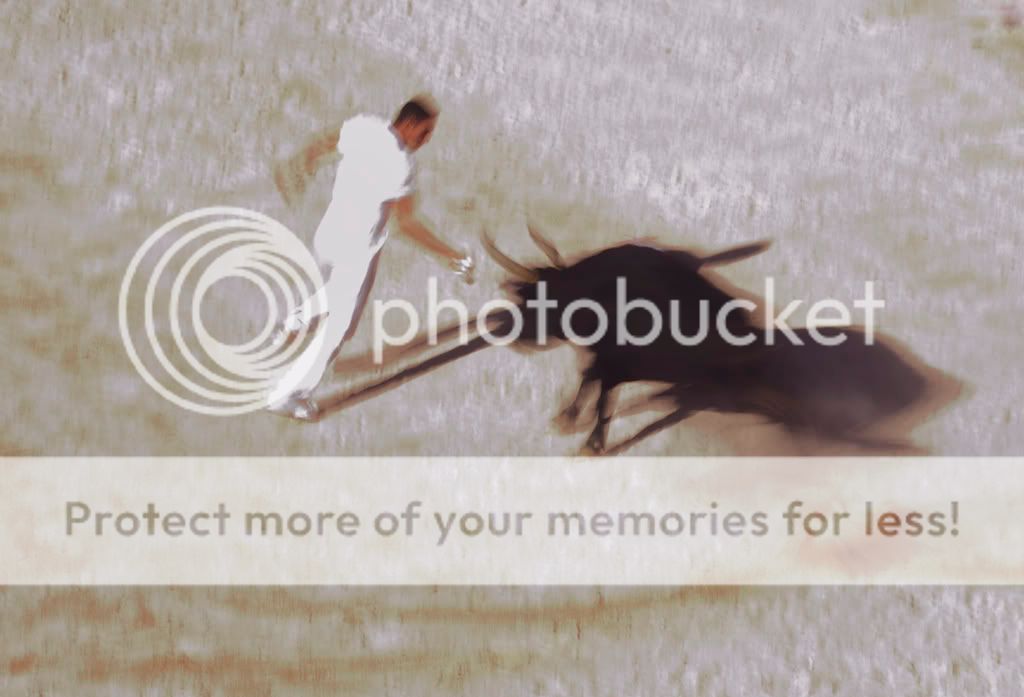
I am very happy with this result. Yes, I had to adjust the image down three more stops in post-processing and crop it but I knew that would be neceessary before I ever tripped the shutter.
Don't let yourself get cornerned by convention. Know the rules, but don't be afraid to break them.
Wendy
Fahim is, as usual, spot on.
Here's an example of an extremely difficult photograph (for me, at least):
This was shot on a Nikkor 70-200/2.8 VR which is a well-regarded lens. I shot the image knowing the exposure would be blown; I needed a slow shutter speed as the motion was key to making the picture work. I shot in shutter priority at 1/15 sec and the camera picked the smallest aperture the lens could provide, f22. It's also spot-metered; matrix metering would have made it worse. This image was shot 1/3 stop underexposed- I should have biased the camera for at least one stop knowing the image woud be overexposed. Obviously sharpness is not a consideration when making a purposefully blurred image:
The picture is unusable as delivered by the camera. Working with the image exposure, and cropping it to the subject I wanted, resulted in a vastly different picture:
I am very happy with this result. Yes, I had to adjust the image down three more stops in post-processing and crop it but I knew that would be neceessary before I ever tripped the shutter.
Don't let yourself get cornerned by convention. Know the rules, but don't be afraid to break them.
Wendy

Cem_Usakligil
Well-known member
Hi Wendy,... I needed a slow shutter speed as the motion was key to making the picture work. I shot in shutter priority at 1/15 sec and the camera picked the smallest aperture the lens could provide, f22.
For these kinds of situations, I'd recommend you to invest in an ND filter (most useful would be the x6 stops or perhaps even a x9 stops one).
Cheers,
Wendy Thurman
New member
Totally agree, Cem- this was a tough situation given that half the arena was light by a low sun and half was not. The lighting changed dramatically and quickly and I admit I am not an accomplished or agile enough photographer to take advantage of such situations. I need two bodies- no joke there- in order to take advantage of differing lighting situations. My biggest mistake in this particular situation was not taking advantage of the D700's exposure compensation abilities.
But I remain happy with the end result. One of my best efforts, I think
Wendy
But I remain happy with the end result. One of my best efforts, I think
Wendy
Wendy Thurman
New member
Used this lens for what it was made for:

85/1.4 Nikkor. This lens is abolutely stunning shot wide open.
Forget f/11- there's no point.
Wendy
85/1.4 Nikkor. This lens is abolutely stunning shot wide open.
Forget f/11- there's no point.
Wendy
Daniel Buck
New member
most (all?) of my lenses are just as sharp at f2.8 or f4 as they are at f8 or f11 (accept for maybe the corners of image, particularly on wide angles). Most of these lenses being faster than f2.8 to begin with though.
Same thing with my large format lenses, they seem to be no sharper stopped down to f22 than they are at f8, with the exception of some of the older lenses (that may not exactly be lined up perfectly? hah!)
Same thing with my large format lenses, they seem to be no sharper stopped down to f22 than they are at f8, with the exception of some of the older lenses (that may not exactly be lined up perfectly? hah!)
.............
Fahim....Hello...Thanks for the input to the thread theres a lot i can learn here....
Wendy....Okay so i didnt understand all of that and may have to read it again but thankyou =) And what was the point of the blurry images and blown out?I didnt understand that....
Erik, good advice you got here. I never go above f8. and when I prepare to be there, i check the light once
and leave it unless it changes significantly.
Use Aperture priority all the time...most of the time, for street. a rf, 35mm lens, bw film, f5.6 and you
are good to go!
pointing the camera's meter ( unless you use an external meter ) at the right place is where all the
action is at.
Landscapes, I go manual. I have the time. everything in focus, f8, hyperfocus on a wa. don't need to
focus at all.
regards.
Fahim....Hello...Thanks for the input to the thread theres a lot i can learn here....
Wendy....Okay so i didnt understand all of that and may have to read it again but thankyou =) And what was the point of the blurry images and blown out?I didnt understand that....