
![]() |
|
HOME
FORUMS
NEWS
FAQ
SEARCH
|
|
|||||||
| Breaking News Updates, innovations, equipment: moderated! |
![]() |
|
|
Thread Tools | Display Modes |
|
#1
|
|||
|
|||
|
How do we benefit from learning new things? For example a second language?
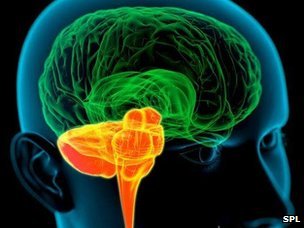
A recent study shows that bilingual people are able to find the correct meaning of voice on a background of extraneous noise. ![]() "Prof Nina Kraus, who led the research, said: "The bilingual's enhanced experience with sound results in an auditory system that is highly efficient, flexible and focused in its automatic sound processing, especially in challenging or novel listening conditions." Co-author Viorica Marian said: "People do crossword puzzles and other activities to keep their minds sharp. But the advantages we've discovered in dual language speakers come automatically simply from knowing and using two languages. "It seems that the benefits of bilingualism are particularly powerful and broad, and include attention, inhibition and encoding of sound." Musicians appear to gain a similar benefit when rehearsing, say the researchers. Past research has also suggested that being bilingual might help ward off dementia." Perhaps, that's a going to extend to learning photography and ability to discern important things around us amongst the overabundance of stimulation we get every day. I wonder? Asher
__________________
Follow us on Twitter at @opfweb Our purpose is getting to an impressive photograph. So we encourage browsing and then feedback. Consider a link to your galleries annotated, C&C welcomed. Images posted within OPF are assumed to be for Comment & Critique, unless otherwise designated. |
|
#2
|
|||
|
|||
|
What if one learns more than two languages, then? Is that a way to completely avoid dementia or is there a maximum number of languages which, when exceeded, makes you downright crazy?
|
|
#3
|
|||
|
|||
|
I think two has done you in man - your mad. I learn scottish and a bit of ungerlish and I still canny make a proper picture - asher we are doomed !
|
|
#4
|
|||
|
|||
|
I'm still working on one language. One day I might have a go at Teenspeak.
__________________
I have my parents to thank and myself to blame for what I am. http://notesfromthecamera.blogspot.com.au/ |
|
#5
|
|||
|
|||
|
Quote:
Seriously, the current evidence is that the adult brain is very plastic and not fixed in that it can learn new tasks and even repurpose sections of the brain to make up for lost circuits. The more the brain is stimulated, the more connections and computing power one has. One new finding of considerable importance to us is that while one can get new brain cells for any new given learned skill or capability, it does not generally alter performance in unrelated tasks and challenges. However, in an amazing new study, exercise along with learning something new, makes the new cells have increased synapses and the performance of new unrelated skills is enhanced too! So learn a new language, musical instrument, chess or a card game and exercise regularly. As brain cells are lost, your new activity will keep in good shape! Asher
__________________
Follow us on Twitter at @opfweb Our purpose is getting to an impressive photograph. So we encourage browsing and then feedback. Consider a link to your galleries annotated, C&C welcomed. Images posted within OPF are assumed to be for Comment & Critique, unless otherwise designated. Last edited by Asher Kelman; May 2nd, 2012 at 12:44 AM. |
|
#6
|
|||
|
|||
|
Now, that seems a pleasant alternative. It may not cure dementia, but should make it quite bearable.
|
|
#7
|
|||
|
|||
|
Quote:
Good advise, Asher. I'm aware that genetics plays its part as well. That doesn't mean we give into them, just work with them. Having taught people with disabilities, some of which gained their disability by accident or disease later in life, its amazing how, with the right processes, they can relearn skills they lost by using other parts of the brain. There are some peculiar outcomes to this at times. Doing things a bit different is quite often surprising to the person as it is to observers. My friend, Lyn suffered horendous brain damage in a car accident. She lost her memory up to the point of the accident and has poor short term memory, lost all speach, vision, and muscle coordination. After 8 years she can talk (strangely enough, with a New Zealand accent because her speech therapist is from there), her vision is back, and she is relatively active. She is only just figuring out how to add and subtract or use simple things like a remote for the TV. Yet she is now a reputable artist even having never done anything artistic in her prevous 45 years. She had to learn to recognise her own mother and daughter all over again. They say she is not the same person they knew before the accident but they love the new Lyn just as much. I never knew the old Lyn. The new one is a very motivated person and a great advocate for brain damage victims. You can read more about Lyn here: http://lyntemby.com.au/ Cheers Tom
__________________
I have my parents to thank and myself to blame for what I am. http://notesfromthecamera.blogspot.com.au/ |
|
#8
|
|||
|
|||
|
Originally Posted by Jerome Marot:
What if one learns more than two languages, then? Is that a way to completely avoid dementia or is there a maximum number of languages which, when exceeded, makes you downright crazy? ------------- Amounts to the same thing, doesn't it? I'm guessing this is related to what some have said, that learning a second language can be difficult, but once you have two, adding another is easier. Once your bilingual, the structures and functions in the brain that multilingualism need are already in place, so the next language is simply a matter of learning syntax, vocabulary, usage, etc., not building synapses. Probably also means the big bump in benefits comes with two. After that, the ROI decreases a bit. But maybe there are benefits they don't know about yet with more than two… (like a bigger pool to get those two more girlfriends from). |
|
#9
|
|||
|
|||
|
That is an interesting theory, but if it were true, people knowing for example English and French would learn Chinese or Russian easily. It is not quite so.
|
|
#10
|
|||
|
|||
|
Very interesting Asher. I wonder if those that are bilingual in languages derived from two different root
languages ( e.g. English and Chinese ) have an advantage? At my age, I have to be aware of anything that would give me even a small advantage later on..before dementia really sets in!! Thanks for this piece of good news. |
|
#11
|
|||
|
|||
|
Quote:
Moreover, there's data to support the special brain processing and even anatomy changes going on in bilinguals.
Previous research from other groups has indicated that Alzheimer's disease has a later onset in bilingual or multilingual groups. "Even if we cannot compare three months of intensive language study with a lifetime of being bilingual, there is a lot to suggest that learning languages is a good way to keep the brain in shape," says Johan Mĺrtensson." Here's the deal, besides the language one gets, the brain is forced to be alert to more ways of looking at things with far better libraries of ideas, for that's what words are, each, in their native language being grown from their own sets of metaphors, links to poetry, parables and wisdom. Even color perception can be enhanced as the boundaries of our distinction of separate colors depends on our cultures. so we are not only enriched for language, but also have new dimensions in appreciation of so many other things we may not be aware of. With each new language one is also receiving more than text, meaning and syntax. Along with the obvious advantages of speaking to people in their native tongue, one also gets to mine their culture. One receives, gratis, the inheritance of 50,000 years of that cultures unique values, measures of things and insights as to how different matters relate to each other. Besides, any chance of staving of Alzheimer's dementia would alone be a good reason for being multilingual! Hmm! I think with my current status, I'd better add another language ASAP! Asher
__________________
Follow us on Twitter at @opfweb Our purpose is getting to an impressive photograph. So we encourage browsing and then feedback. Consider a link to your galleries annotated, C&C welcomed. Images posted within OPF are assumed to be for Comment & Critique, unless otherwise designated. |
|
#12
|
|||
|
|||
|
Hi, Asher,
Quote:
Another situation is if the second language is learned formally (and of course it isn't always), it is likely that the concepts are explained better than they were in the formal instruction in one's native language (in part because we gain fluency in our native language over a long period, much of it just by immersion, and so a lot of things are not addressed in detail in the formal study). For example, I don't know whether the concept of the subjunctive mood was ever taught to me in my English grammar courses in grade school, but if so,I ignored it. When I studied French in junior high school, the concept was thoroughly explained ("Si jčtais roi"), and I could immediately see the close parallel with the corresponding English syntax ("If I were King"), which has since been very helpful to me. Best regards. Doug |
|
#13
|
|||
|
|||
|
Quote:
Poor Debbie, We've been together for almost 9 years and I still only know a few bits of Laotian, but I do admit I have never really tried to learn so who knows. I'm trying to just pick it up as we go. Funny thing is I easily pick up on what is going on during laos conversations like the mood of the conversation, etc. Now Jacob on the other hand, he can count to 20 in English, Laos and Spanish before he hit 3 years old. I bet he'll surpass Debbie and me by age 10! |
|
#14
|
|||
|
|||
|
Quote:
Quote:
Quote:
![]() Asher
__________________
Follow us on Twitter at @opfweb Our purpose is getting to an impressive photograph. So we encourage browsing and then feedback. Consider a link to your galleries annotated, C&C welcomed. Images posted within OPF are assumed to be for Comment & Critique, unless otherwise designated. Last edited by Asher Kelman; October 26th, 2012 at 09:17 AM. |
|
#15
|
|||
|
|||
|
Quote:
I'm curious. First, I was thinking "easier," not "easy;" so is it not the case that someone who has learned two related languages (English and French) can learn another language from a different group (Chinese or Russian) more easily? If not, that's quite interesting. |
|
#16
|
|||
|
|||
|
In any case, it would be difficult to prove. For example, amongst the French speaking people, you have people who find learning Russian difficult and people who find it easy. If you consider the French speaking people who learned English, you will still find some who find Russian difficult (me...) and some who find it easy. Measuring the effect of knowing the English language on the "felt difficulty to learn the Russian language" would be rather tricky: you would need an accurate measurement on "how difficult it is to learn a new language". Moreover, you would need to correct it for the effect that some people are better than other at learning languages, generally. I am not really aware of a such study.
|
|
#17
|
|||
|
|||
|
Quote:
In any case, I'm not aware of any such study, either (though my not being aware is statistically meaningless). I am jealous of you bi- and multi-linguists, as I've not been able to learn a second language (some would argue I've barely been able to learn a first one). |
|
#18
|
|||
|
|||
|
Quote:
Yes, community impressions are important and can be amazingly consistent, like George bush II was, for much of his tenure, fairly unimpressive as president or that Donald Trump is rather pompous. Fortunately, neuroscientists can use much more rigid tools than impressions of the public sentiment. Measurements of brain structure activity to growth by PET scan and MRI respectively, after incense language immersion and fluent mastery have shown where brain activity is then what grows. The Tel Avivi foreign and native language stuffy also is well designed and clearly interoperable by anyone with a modern education. Asher
__________________
Follow us on Twitter at @opfweb Our purpose is getting to an impressive photograph. So we encourage browsing and then feedback. Consider a link to your galleries annotated, C&C welcomed. Images posted within OPF are assumed to be for Comment & Critique, unless otherwise designated. |
|
#19
|
|||
|
|||
|
I do not why make such a big issue out of it
Either one can, can't or won't. We all cannot be Omar Khayyam, or Vermeer, or Keppler. |
|
#20
|
|||
|
|||
|
Quote:
![]() Asher
__________________
Follow us on Twitter at @opfweb Our purpose is getting to an impressive photograph. So we encourage browsing and then feedback. Consider a link to your galleries annotated, C&C welcomed. Images posted within OPF are assumed to be for Comment & Critique, unless otherwise designated. |
|
#21
|
|||
|
|||
|
Quote:
After all it would be dismal world if all of us were Al-Jabr. Last edited by fahim mohammed; November 5th, 2012 at 02:06 PM. Reason: spell checked |
|
#22
|
|||
|
|||
|
Quote:
Some people find it easier to study how the Mars Spacecrafts calculated their trajectories than to appreciate Vermeer. |
|
#23
|
|||
|
|||
|
OK. More power to them.
|
|
#24
|
|||
|
|||
|
No. More power to all of us.
It would be a dismal world if all of us were Al-Jabr, but it would also be a dismal world if none of us were Al-Jabr. |
|
#25
|
|||
|
|||
|
Quote:
This for Asher: Language enhancing skills: ' ENHANCING '. To many nights in Reno?
|
|
#26
|
|||
|
|||
|
After a lifetime of experience, it is my belief that the best brain enhancing exercise, excluding a specific
Discipline like medicine or Maths etc. , is to expose oneself to a totally different culture for an extended period of time. If one is presented with such an opportunity, it should be given very serious consideration. Regards. |
![]() |
| Bookmarks |
| Thread Tools | |
| Display Modes | |
|
|
Similar Threads
|
||||
| Thread | Thread Starter | Forum | Replies | Last Post |
| Question: Technical fortnight | Sandrine Bascouert | Image Processing and Workflow | 17 | September 28th, 2010 04:02 PM |
| Color perception shifts from right brain to left: report | Doug Kerr | CM Theory and Practice | 2 | November 18th, 2008 05:01 PM |
| B&W or Color ? | Antonio Correia | Layback Cafe | 59 | March 11th, 2007 01:11 PM |